1. Name yourself and the business
"Namaste [Name] ji, main [Business name] se bol rahi hoon." People decide in seconds whether to listen. A clear name sounds like a real business, not spam.
Three scripts every sales team needs: calling a new enquiry, a cold introduction and reviving an old lead. Each one in Hinglish, Hindi and English, with replies to the objections Indian customers actually say.
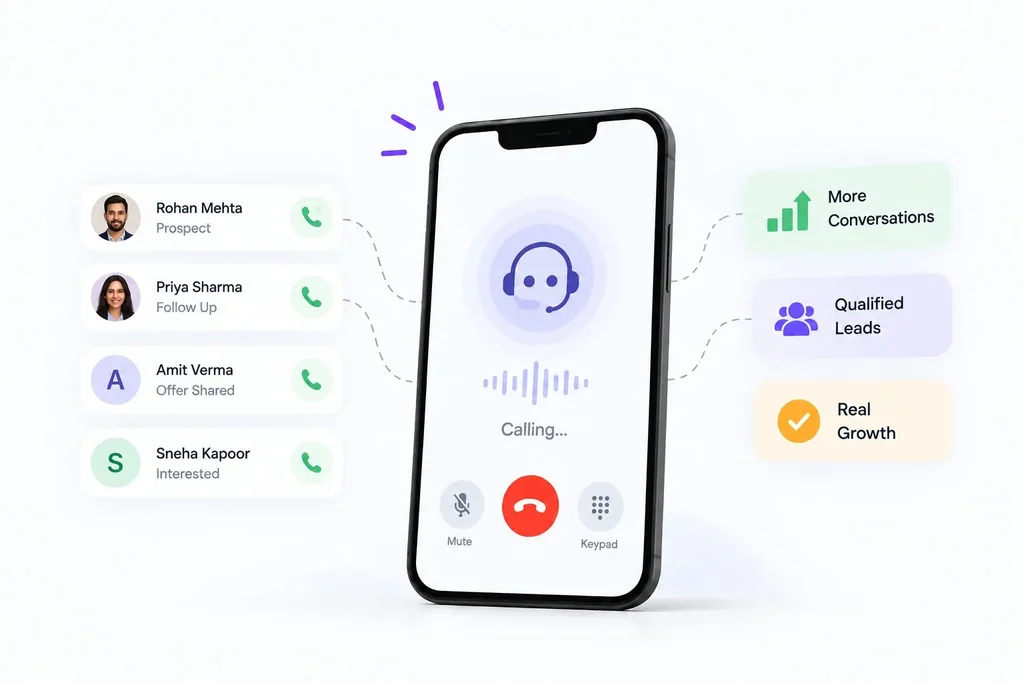
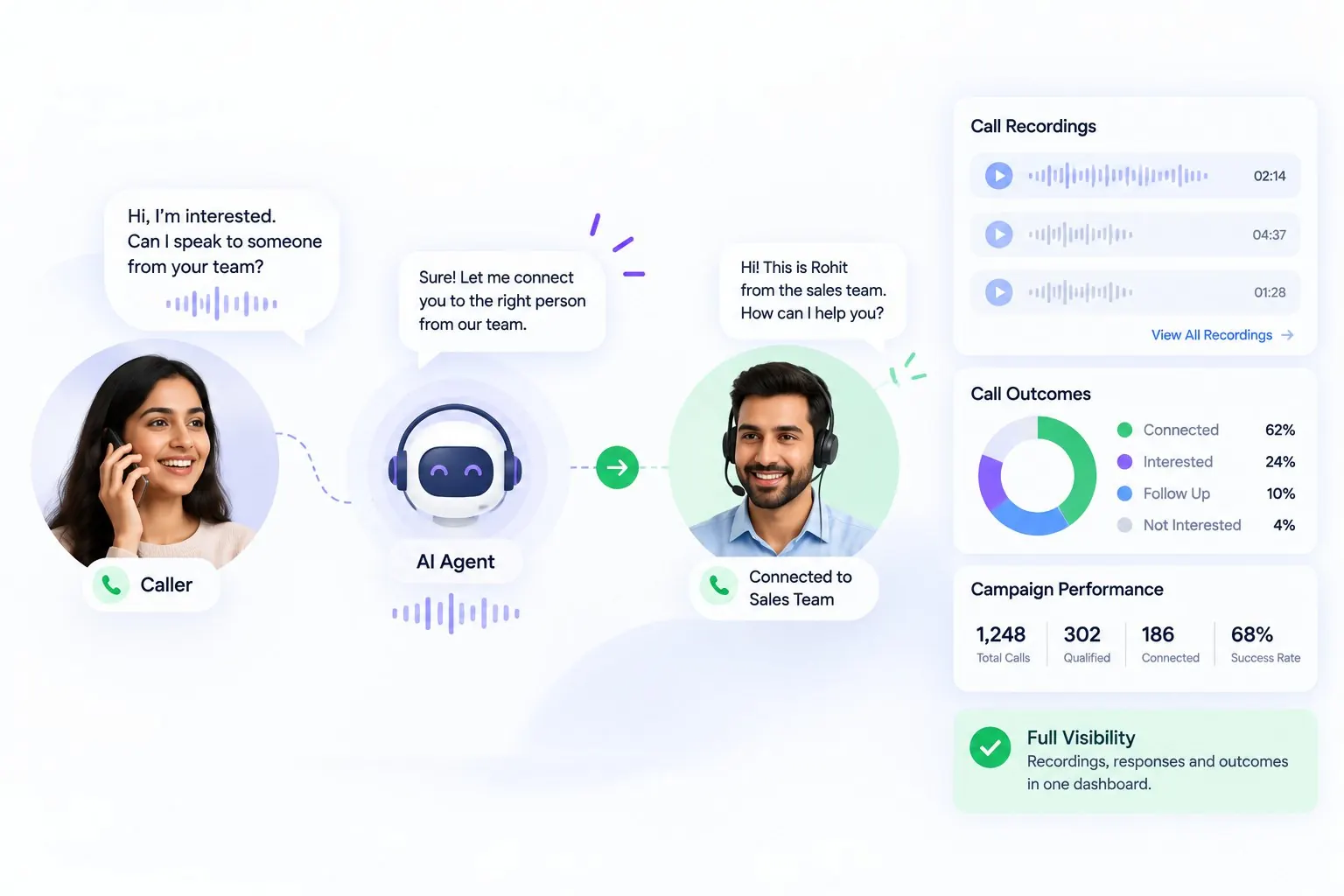
A good telecalling script is short. Name yourself and the business, give a reason the customer recognises, ask permission, then ask one question at a time and agree one next step.
Most scripts fail because they read the brochure. Customers decide in the first few seconds whether to listen, so the opening matters more than the pitch.
Use the scripts below as a starting point, or write one for your own offer with our free AI call script generator.
For leads from ads, forms and portals. Call within minutes of the enquiry if you can.
Caller: Namaste [Name] ji, main [Business name] se bol rahi hoon. Aapne abhi [Product] ke baare mein enquiry ki thi. Kya do minute baat ho sakti hai?
Customer: Haan, boliye.
Caller: Thank you! Aap ise apne liye dekh rahe hain ya business ke liye?
Customer: Business ke liye.
Caller: Samajh gayi. Aapko ye kab tak chahiye, is mahine ya thoda baad mein?
Customer: Is mahine.
Caller: Perfect. Main aapko hamare expert se abhi connect kar doon, ya aaj shaam 5 baje call karwa doon?
Customer: Shaam 5 baje theek hai.
Caller: Done, aaj shaam 5 baje hamari team aapko call karegi. Dhanyavaad!
Caller: नमस्ते [Name] जी, मैं [Business name] से बोल रही हूँ। आपने अभी [Product] के बारे में पूछताछ की थी। क्या दो मिनट बात हो सकती है?
ग्राहक: हाँ, बोलिए।
Caller: धन्यवाद! आप इसे अपने लिए देख रहे हैं या व्यवसाय के लिए?
ग्राहक: व्यवसाय के लिए।
Caller: समझ गई। आपको यह कब तक चाहिए, इसी महीने या थोड़ा बाद में?
ग्राहक: इसी महीने।
Caller: बढ़िया। क्या मैं आपको हमारे विशेषज्ञ से अभी जोड़ दूँ, या आज शाम 5 बजे कॉल करवा दूँ?
ग्राहक: शाम 5 बजे ठीक है।
Caller: ठीक है, आज शाम 5 बजे हमारी टीम आपको कॉल करेगी। धन्यवाद!
Caller: Hello [Name], this is [Business name]. You just enquired about [Product]. Is this a good time for two minutes?
Customer: Yes, go ahead.
Caller: Thank you! Are you looking at this for yourself or for your business?
Customer: For my business.
Caller: Got it. When do you need it, this month or a little later?
Customer: This month.
Caller: Great. Shall I connect you to our specialist right now, or set a call for 5 PM today?
Customer: 5 PM works.
Caller: Done. Our team will call you at 5 PM today. Thank you!
Words in [brackets] are placeholders. Works for a human telecaller or an AI voice agent.
For people who have not enquired. Be brief, ask permission and leave an easy exit.
Caller: Namaste [Name] ji, main [Business name] se bol rahi hoon. Hum [Location] mein [businesses like yours] ki [problem] solve karte hain. Kya 30 second de sakte hain?
Customer: Haan, jaldi bataiye.
Caller: Bilkul. Abhi aap [task] kaise karte hain, khud ya kisi team se?
Customer: Hamari team karti hai.
Caller: Achha. Agar [benefit] ho jaaye, to kya aap 10 minute ka demo dekhna chahenge?
Customer: Theek hai, dekh lete hain.
Caller: Kal subah 11 baje ya shaam 4 baje, kya theek rahega?
Caller (agar mana karein): Koi baat nahi, aapka time dene ke liye dhanyavaad. Aapka din achha rahe!
Caller: नमस्ते [Name] जी, मैं [Business name] से बोल रही हूँ। हम [Location] में [आपके जैसे व्यवसायों] की [समस्या] हल करते हैं। क्या 30 सेकंड दे सकते हैं?
ग्राहक: हाँ, जल्दी बताइए।
Caller: बिल्कुल। अभी आप [काम] कैसे करते हैं, खुद या किसी टीम से?
ग्राहक: हमारी टीम करती है।
Caller: अच्छा। अगर [फ़ायदा] हो जाए, तो क्या आप 10 मिनट का डेमो देखना चाहेंगे?
ग्राहक: ठीक है।
Caller: कल सुबह 11 बजे या शाम 4 बजे, क्या ठीक रहेगा?
Caller (अगर मना करें): कोई बात नहीं, समय देने के लिए धन्यवाद। आपका दिन शुभ हो!
Caller: Hello [Name], this is [Business name]. We help [businesses like yours] in [Location] with [problem]. Could I have 30 seconds?
Customer: Okay, quickly.
Caller: Sure. How do you handle [task] today, yourself or with a team?
Customer: Our team does it.
Caller: Understood. If we could [benefit], would a 10-minute demo be worth it?
Customer: Okay.
Caller: Would tomorrow at 11 AM or 4 PM suit you better?
Caller (if not interested): No problem at all, thank you for your time. Have a good day!
Words in [brackets] are placeholders. Works for a human telecaller or an AI voice agent.
For enquiries from weeks or months ago. Remind them, ask what changed, offer one reason to talk again.
Caller: Namaste [Name] ji, main [Business name] se bol rahi hoon. Aapne kuch time pehle [Product] ke baare mein poocha tha. Kya aap abhi bhi dekh rahe hain?
Customer: Haan, par abhi decide nahi kiya.
Caller: Samajh sakti hoon. Decide karne mein kya rukawat hai, budget, timing ya kuch aur?
Customer: Budget thoda zyada lag raha tha.
Caller: Iske liye abhi [Offer] chal raha hai. Kya main hamare expert se ek call set kar doon jo aapko exact options bata dein?
Customer: Theek hai.
Caller: Kal kaunsa time theek rahega?
Caller: Hello [Name], this is [Business name]. You asked about [Product] a while ago. Are you still looking?
Customer: Yes, but I have not decided.
Caller: I understand. What is holding you back: budget, timing or something else?
Customer: The budget felt high.
Caller: We have [Offer] running right now. Shall I set a call with our specialist to go through the exact options?
Customer: Okay.
Caller: What time tomorrow works for you?
Words in [brackets] are placeholders. Works for a human telecaller or an AI voice agent.
| Hinglish reply | English reply | |
|---|---|---|
| "Abhi busy hoon" | Koi baat nahi. Aaj shaam ya kal subah, kab call karun? | No problem. Would this evening or tomorrow morning be better? |
| "Interested nahi hoon" | Theek hai, ek last sawaal: kya abhi [Product] ki zarurat hi nahi hai, ya timing sahi nahi hai? | Understood. One last question: is it not needed at all, or just not the right time? |
| "Price bahut zyada hai" | Samajh sakti hoon. Aapka budget roughly kitna hai? Main us hisaab se option bata deti hoon. | I understand. What budget did you have in mind? I will suggest options that fit. |
| "Ghar walon se poochna hai" | Bilkul. Kya main details WhatsApp kar doon taaki aap sabko dikha sakein? Kal call kar loon? | Of course. Shall I send the details so you can share them? Can I call you tomorrow? |
| "Aapko mera number kahan se mila?" | Aapne [Date] ko [Source] pe enquiry ki thi. Agar aap call nahi chahte to main abhi list se hata deti hoon. | You enquired on [Source] on [Date]. If you would rather not be called, I will remove you right away. |
| "Mujhe call mat karo" | Bilkul, main aapka number hata deti hoon. Takleef ke liye maafi. | Of course, I will remove your number. Sorry for the trouble. |
"Namaste [Name] ji, main [Business name] se bol rahi hoon." People decide in seconds whether to listen. A clear name sounds like a real business, not spam.
"Aapne [Project name] ke baare mein enquiry ki thi." Referring to their own enquiry gets far more attention than a cold pitch.
"Kya abhi do minute baat ho sakti hai?" If they say no, offer a callback time instead of continuing.
Ask, wait, listen. Long monologues are where calls are lost.
In most Indian cities, customers say "payment", "booking" and "site visit", not "bhugtan" or "aarakshan". Hinglish sounds natural for urban lists. Write the script the way your best caller talks.
For customers who are more comfortable in their mother tongue, a script fully in that language feels respectful and warm. Gujarati and Marathi lists respond well to their own language, especially around festivals.
Start in the language of the list, and switch when the customer does. Troika's AI agent does this automatically in 9 Indian languages. Hindi AI calling.
Qualifies a project enquiry and captures budget, in Hindi.
Checks back on a course enquiry and shares the details.
Answers a finance enquiry and logs the request.
Invites a business to the trade show and confirms attendance.
AI calling is used legally in India when it follows the same rules as any business calling: TRAI's telemarketing regulations, respect for the DND (Do Not Disturb) registry, permitted calling hours and a clear way to opt out.
This is general guidance, not legal advice. Compliance depends on your campaign intent and your data.
Write a script for your own business and offer in 30 seconds, in 5 languages. Try the generator.
Enquiry qualification, site visits and follow-ups in 5 languages. See scripts.
Enquiries, counselling bookings and fee reminders. See scripts.
Renewals, lapsed policies and cross-sell calls. See scripts.
Introduce yourself and the business, give a reason the customer recognises, ask permission, ask one question at a time and agree one next step. Keep each line short and plan replies to common objections.
Your name, the business name and why you are calling, for example "Aapne [Product] ke baare mein enquiry ki thi", followed by a quick permission question.
Accept it, ask one gentle question to learn whether it is "not needed" or "not now", and end politely. Never argue.
Yes. All three scripts on this page are in Hindi (Devanagari), Hinglish and English, and the free generator can write one for your own offer.
Yes, if the lines are short, there is one question per turn and the next step is clear. AI agents follow the same script on every call.
Call new enquiries as soon as possible after they come in. For general campaigns, stay within normal business hours and avoid late evenings.
Enter your number and we will set up a live AI demo call for you. Hear the voice, interrupt it, ask it questions, in Hindi or English.